A proven model for community leaders to create transformative programs that support young people in discovering who they are through creativity, mentorship, and modern rites of passage.
A Guide for Communities Ready to Serve Their Youth
"Show me your youth and I will show you the future of your nation." — Georges Vanier
As teens, young people are caught between wanting to belong and wanting to be independent. In that tension, they must decide who they are and what course their life will take. And if that weren't hard enough, they come of age in a modern world marked by information overload, consumerism, job insecurity, and a growing sense of isolation and disconnection.
Rites of passage for youth are as old as humanity. They've existed far longer than our modern substitutes of getting a driver's licence or a first job. Done right, they ensure a healthy future for the individual and their community. Without them, teens can create their own harmful rites of passage through drugs, alcohol, and violence.
Our modern culture has not only forgotten how to help teens enter adulthood, but also squanders the tremendous gifts youth bring to evolve our societies. The exchange of wisdom from elder to youth has been lost. Television, screens, and social media act as artificial community, separating us from honouring the voice of the young and connecting with the wisdom of the old.
"Where do youth get their myths today? They make them up themselves. This is why we have graffiti all over the city. These kids have their own gangs and their own initiations and their own morality and they're doing the best they can. But they're dangerous because their own laws are not those of the city. They have not been initiated into our society."
— Joseph Campbell, The Power of MythThis gap calls for an intentional response. Communities around the world are recognising the need to create structured, safe, and heart-centred programs that guide youth through the transition from childhood to adulthood, programs that educate not only the mind, but the heart.
A holistic approach to youth development, built on the wisdom of traditional rites of passage and adapted for the modern world.
At its core, this model is a residential program, typically 7 to 10 days, that creates a temporary village where youth, mentors, and leaders form a living community. It is designed around a central question offered to every young participant: "Who am I?"
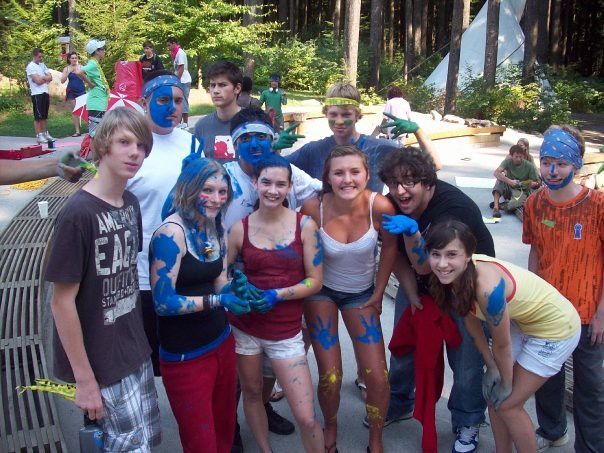
Unlike a traditional camp focused on recreation alone, this model weaves together inner and outer development. While teens experience the fun activities of a summer camp and build lasting friendships, there is also a deeper invitation for each teen to truly look into who they are and what it means to be a human being.
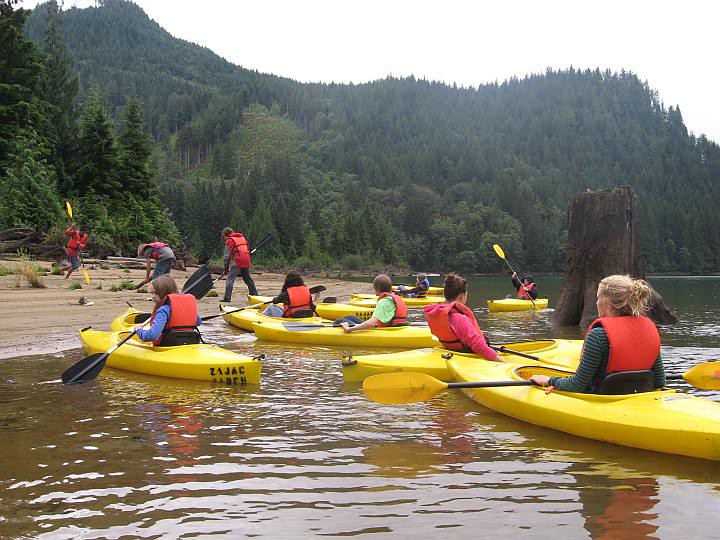
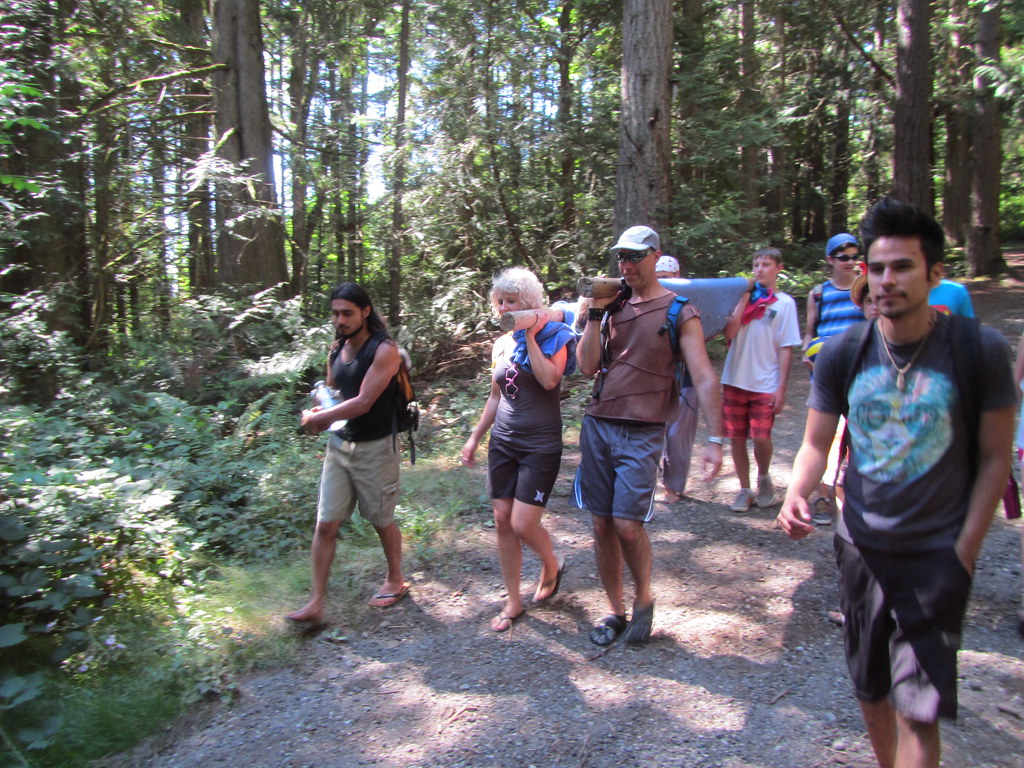
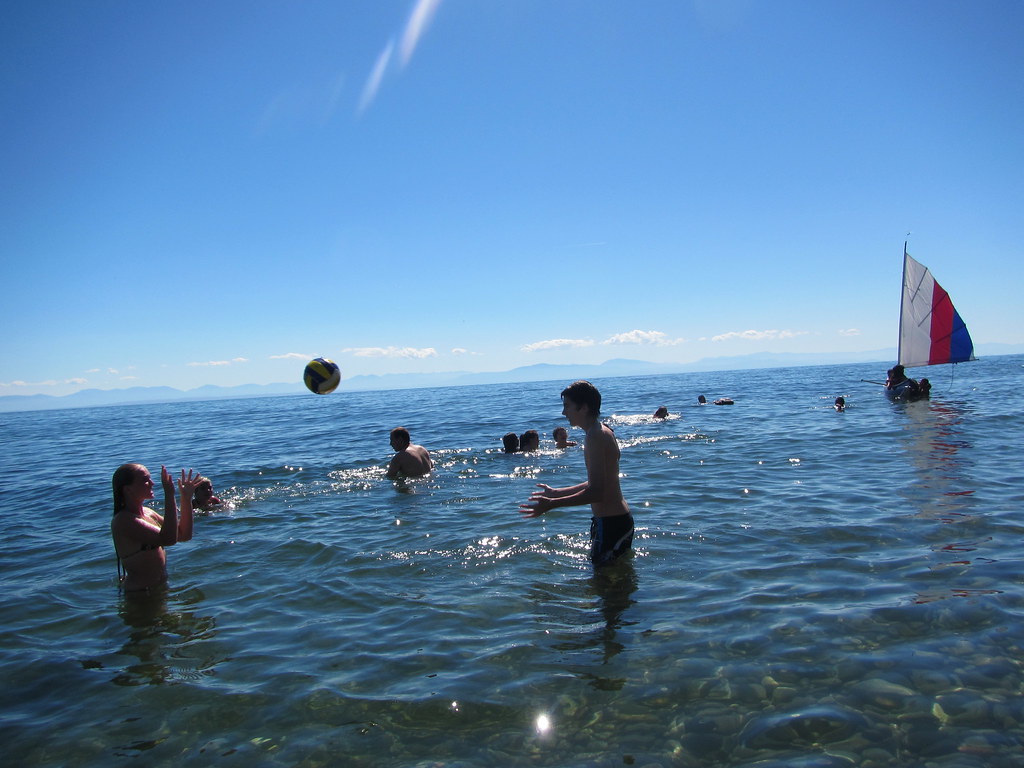
Excursions, land-based learning, and survival skills that develop knowledge of and partnership with the natural world.
Music, dance, fine arts, and communication to harness creative energy and awaken new capacities for self-expression.
Daily practices of movement, mindfulness, and personal discipline to develop a grounded sense of self.
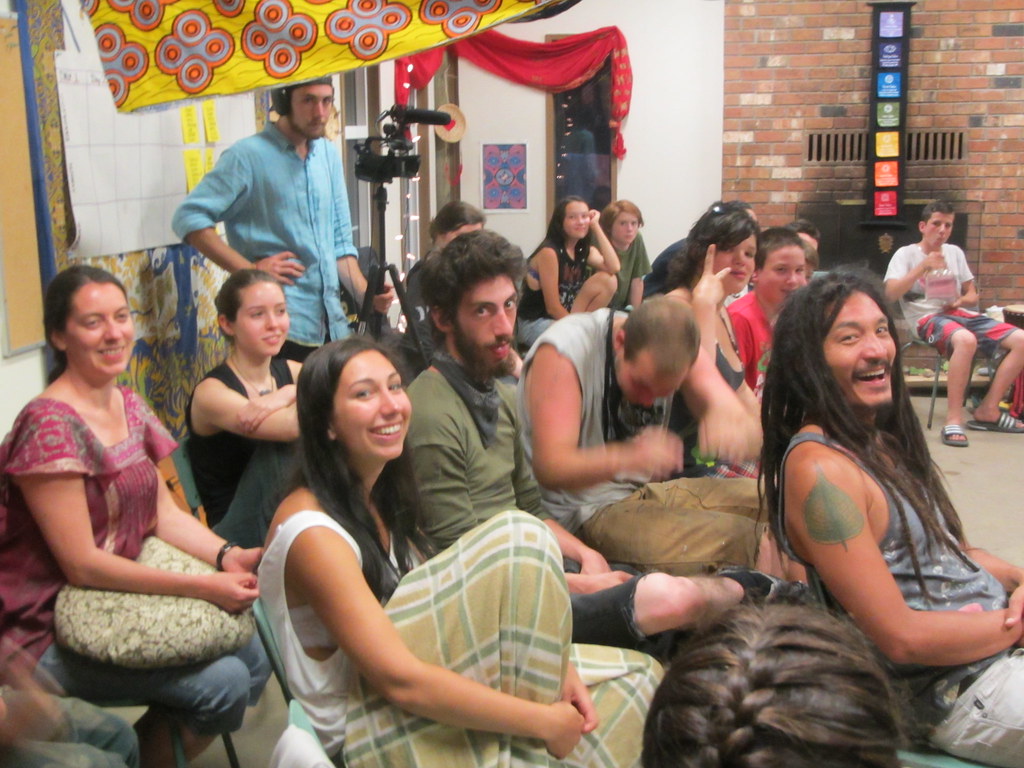
Sharing circles, group challenges, and village living that build trust, empathy, and authentic connection.
While many programs for youth focus on outer development, this model helps them grow inside and out. It does not practise a hierarchical model of leadership. Programs are co-created as a team, allowing a powerful synergy between contributors. Every leader and volunteer comes together around a common cause: to be in service to youth.
The measure of success is how the youth in the program are able to relate to themselves and the world in a way that is truly empowering.
As the program matures, there is a natural invitation to weave in practical, ancestral skills that ground the inner journey in the real world. These are not abstract lessons but living practices, taught by hand and learned by doing.
Cooking
Preparing meals together from whole ingredients, nourishing the body and the community.
Natural Medicine
Identifying plants, making salves and teas, reconnecting with the healing wisdom of the natural world.
Food Preserving
Fermenting, drying, and canning, understanding cycles of abundance, patience, and provision.
Natural Building
Working with earth, wood, and stone, building shelter with one's own hands and learning to shape the world.
A young person who can light a fire, prepare medicine from a plant, or build a structure with their hands carries a quiet confidence that no screen can give them. As the program grows, these skills can expand into deeper apprenticeships, becoming a bridge between the camp experience and everyday life.
The journey inwards yields gifts that last a lifetime.
Improved self-confidence, the ability to listen to intuition, and a deeper understanding of their own unique gifts and identity.
Group communication skills, lasting friendships, and the experience of belonging to a community that truly sees and values them.
The courage to face fears, take responsibility for personal choices, and navigate challenges with creativity and inner strength.
Creative self-expression, teamwork skills, and a felt understanding of what it means to lead from the heart and serve others.
Modelled on the traditional three-part experience found in cultures all over the world, these stages form the arc of every activity and of the program as a whole.
While academic education focuses on preparing teens to enter the workforce, this model educates teens to access their life force. The rites of passage enrich a teen's appreciation for cultural traditions, personal and social responsibilities, connection to nature, and a sense of personal purpose.
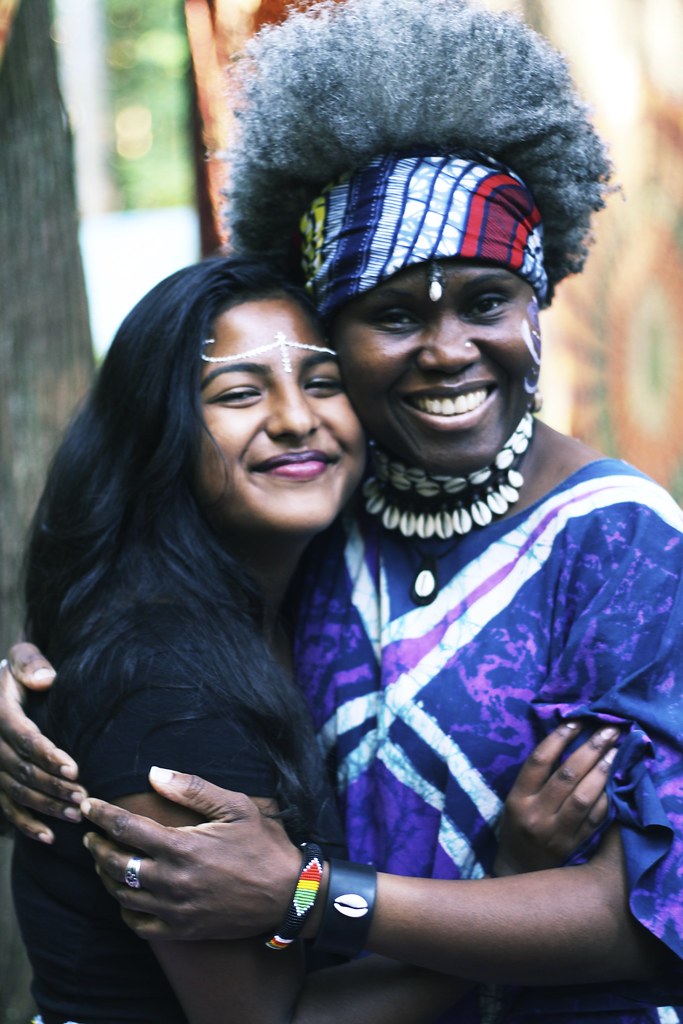
From the known to the unknown. Teens let go of the familiar and comfortable as they enter a new world to discover who they are and what they carry hidden within them. The journey into the unknown begins here.
Facing challenges and receiving the gift. Through physical and psychological tests and adventures, teens face their fears, overcome limitations, discover creative capacities, open their hearts, and receive a gift they carry forth.
Back to the village. Teens are received with respect and celebration for their newfound self-awareness. They share their discoveries and are acknowledged for the gift they now carry into the world.
The whole arc of the journey mirrors this ancient pattern. Separation: leaving family, school, and the identity performed every day. Ordeal: emotional and physical tests that ask something real of the young person. Return: coming home with an expanded sense of self.
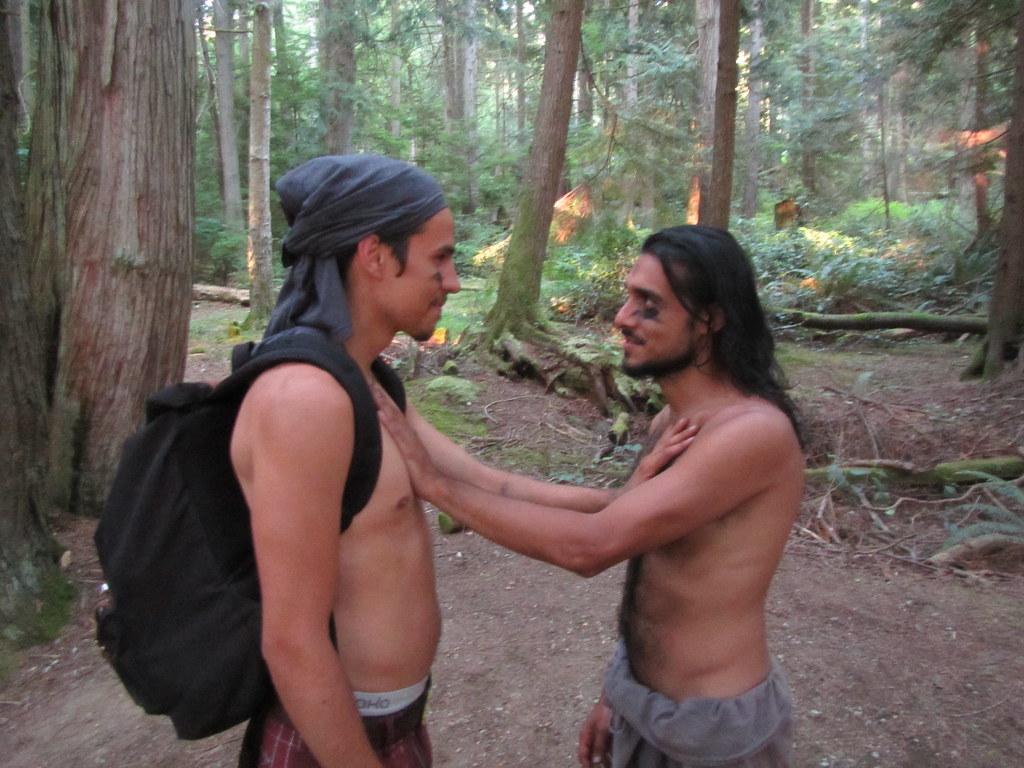
A young man sits in a sharing circle with his peers. Something in him opens. He speaks what he has never spoken aloud. The circle holds him. Tears come. This is the ordeal: the courage to let the fortress crumble. The next morning, he walks among his peers and feels no less strong for having been vulnerable.
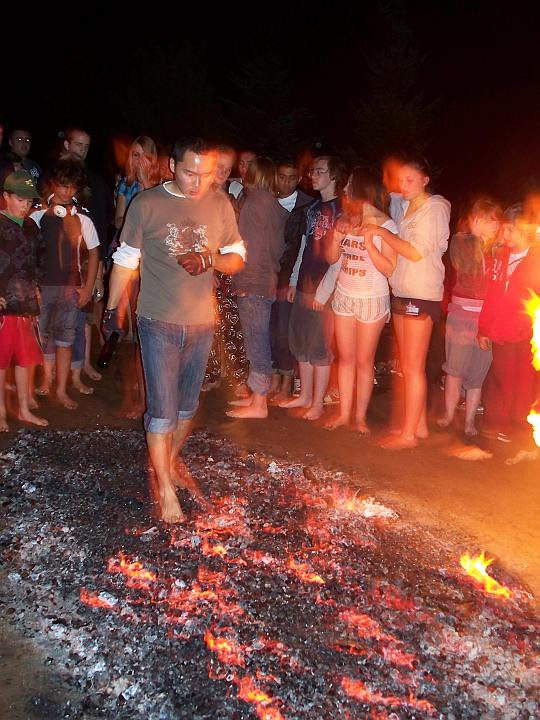
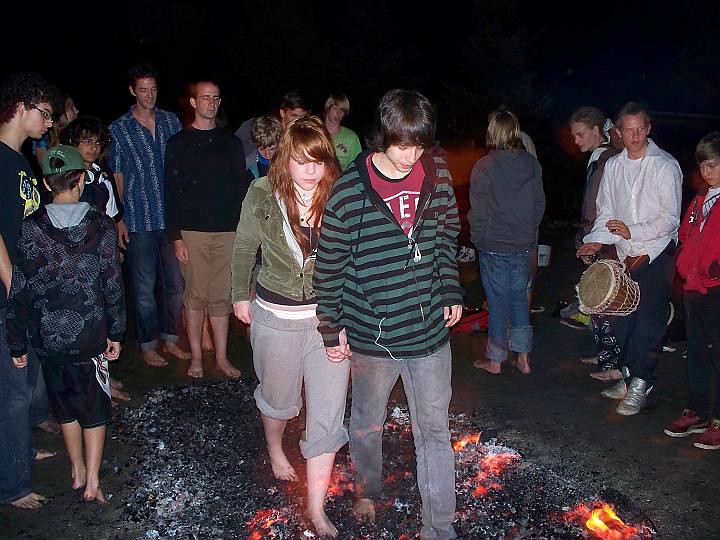
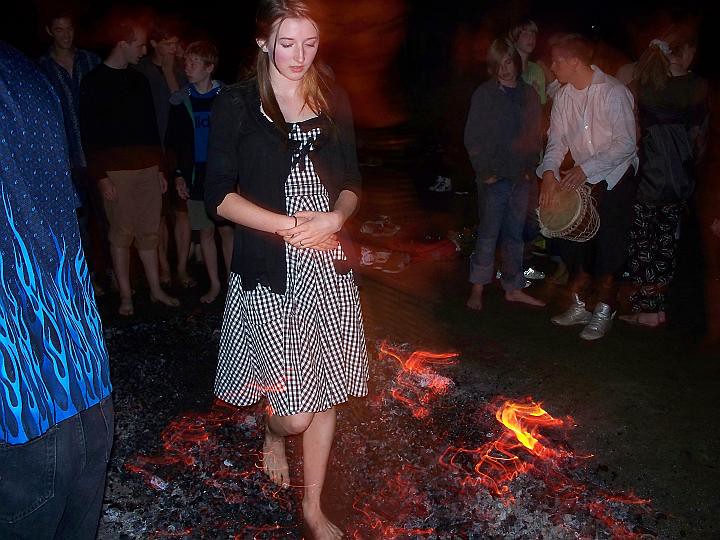
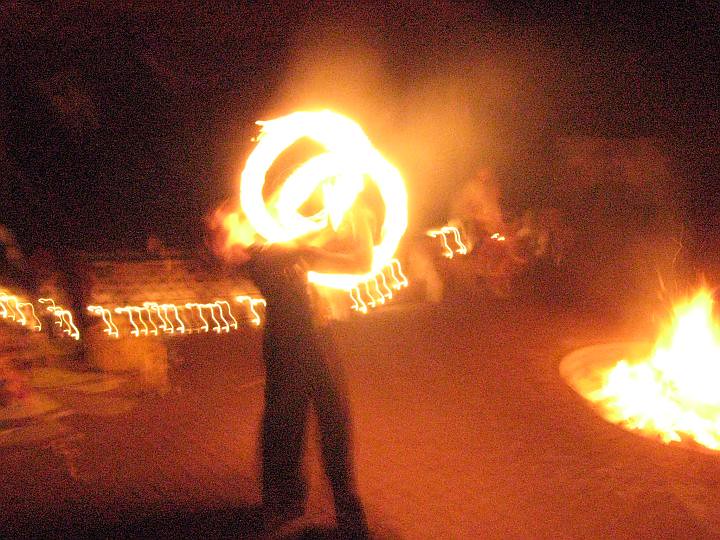
A young woman stands barefoot before a bed of hot coals. Every instinct says stop. She breathes. She walks. On the other side, something has shifted. She has met herself at the edge, and she did not turn away.
Both carry the same gift home: the knowing that real strength lives inside the open heart.
The principles that hold the container.
Every member of the community, youth, mentors, and leaders, is held to the same standard of acting with integrity, transparency, and personal responsibility.
Self-discovery is not a destination. The program trusts each person's unfolding and creates the conditions for it without forcing outcomes.
All activities are designed to be emotionally and physically safe, non-coercive, sensitive to individual needs, and supportive of each person's dignity.
The program sees each teen, and each adult, as possessing a seed of genius. The work is to recognise it and create the conditions for it to grow.
Although roles exist, they are held with equal reverence. Leadership is shared, fluid, and rooted in service. Everyone is a mentor to each other.
Honest sharing about challenges and limitations is foundational. Each person is invited to communicate their needs so the community can support them.
Each role is held with as much reverence as the next. We are all part of a larger web and each of us is equally valuable. Although specific roles carry specific responsibilities, once on location the state of these roles may become quite fluid — people filling in where needed and in ways that are most easeful and joyful.
Embodies the spirit of the program's vision in every action and communication. Sets the example for young, emerging leaders and ignites their desire to match their own potential. Source of inspiration and support for the entire team.
Responsible for holding the overall understanding of the emotional climate of every individual and the group as a whole. Aware of developmental stages, can recognise group dynamics, and has great ability to communicate with everyone involved. Meets people with acceptance wherever they are while simultaneously holding the highest possibility in everyone.
The lead designer and overall architect of the program. Capable of seeing the larger picture as well as the smallest details. Understands the foundation required for physical, mental, and emotional health, safety, and trust.
Understands the value of each stage of the program and possesses the ability to anticipate its needs. Provides coordination and support for all practical aspects. They attend to any loose ends and essentially make the program possible. Finds joy in service.
A person who went through their own struggle and comes with fresh wisdom to pass on, inspiring youth to live fully their own path. "Mentor" is a sacred relationship that nourishes the dignity of the mentee. Mentors witness and guide through authenticity and presence.
Moving from activity to activity, person to person, with joy and purpose. Acting with rooted flexibility and adaptable to each undertaking, in constant motion and present to the circumstances they are stepping into. Skillful and resourceful, bringing unique tools to every situation.
The brave young leader, first to step into the unknown. Everyone witnesses their choice for personal power. In playing fully and making mistakes, they learn to transform what they have learned into new gifts. They embody the spark of life in all its forms.
Guest Leaders bring their own expertise and wisdom to the teens through experiential learning activities. They enter the community holding great honour, grace, and awareness of the depth of the journey the group is on together.
All roles share a common foundation: act with integrity and transparency, be aware of your own reactivity and inner resources, structure time for self-care, and attend to the wellbeing of every person in the community.
The powerful rites of passage the teens experience become even more powerful when met with a shift in consciousness from the parents who choose to go on their own journey.
Your children are not your children.
They are the sons and daughters of Life's longing for itself.
They come through you but not from you,
and though they are with you yet they belong not to you.
You may give them your love but not your thoughts,
for they have their own thoughts.
You may house their bodies but not their souls,
for their souls dwell in the house of tomorrow,
which you cannot visit, not even in your dreams.
A youth program without a parent component is only half the work. The teen returns home transformed, but returns to the same environment, the same patterns, the same unconscious dynamics. Without a parallel shift in the parents, the transformation struggles to take root.
Parenting itself is a long journey with many bumps along the road. The tools that worked for parenting babies and young children turn out to be completely ineffective for parenting teens. At this stage, the journey as a parent undergoes a profound shift. Once sweet and gentle, children may now question you about who you truly are and everything you stand for. Most parents were never given real guidance for this moment — because they themselves never received it when they were young.
This is why a companion Parent Journey is not optional, it is essential. In this intensive (typically 2–3 days, running in parallel with or at the close of the youth program), parents explore many of the same tools their teens are learning. They are invited into the same fundamental questions: Who are we? What are we here for?
Parents recognise the guidance they themselves did not receive as teens, and profoundly understand this transition so they can more lovingly and effectively support their children through it.
Parents examine the unconscious patterns from their own teenage years that impact their relationships with their children today, and begin to shift them. New communication tools replace old reactive habits.
By awakening to what teens are going through, the fears, the searching, the courage it takes, parents learn to see their children with fresh eyes. They move from trying to control to learning to witness.
The Return stage of the rite of passage requires that family and community are ready to receive the teen, to acknowledge their growth, honour their journey, and celebrate who they are becoming. Parents prepare and participate in this receiving ceremony.
This is more than a parenting workshop. It is an invitation for parents to initiate themselves into a conscious, heart-centred community where they work together to nurture true human beings. They tap into their role as true elders who are responsible for bringing up a future generation.
In these times of fragmented community and loss of village, we have a great deal to gain by removing ourselves from daily life so that we can strengthen, clarify, and renew our purpose together.
This framework was born from over a decade of practice in British Columbia, Canada. Here is what happened when a community answered the call.
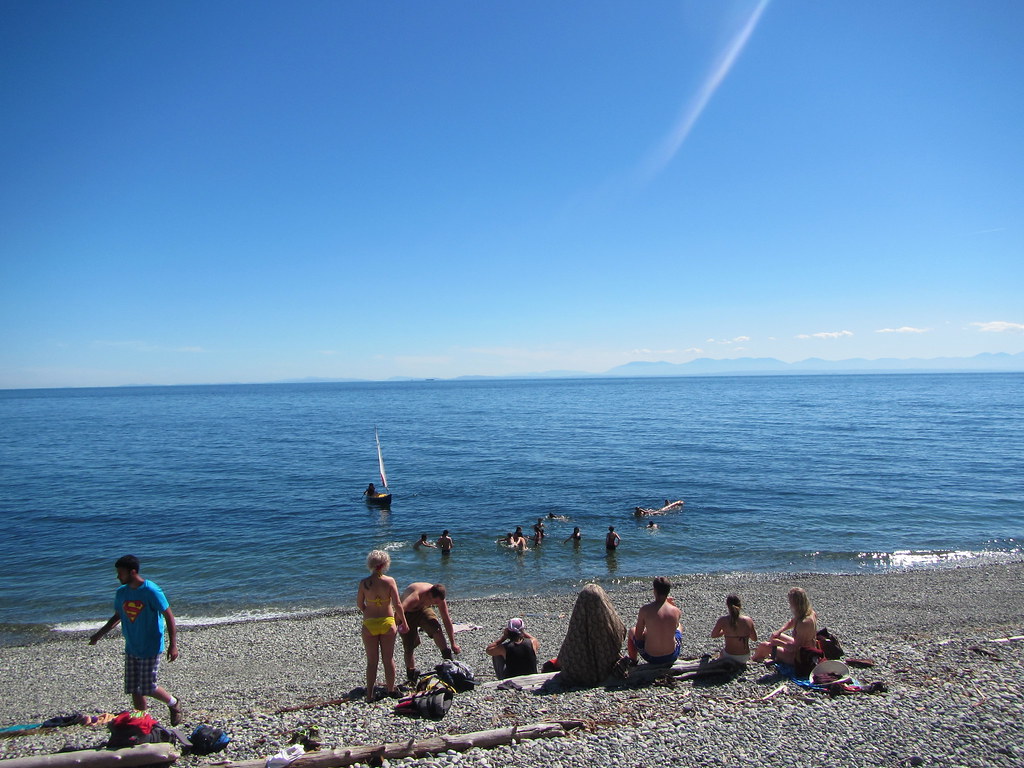
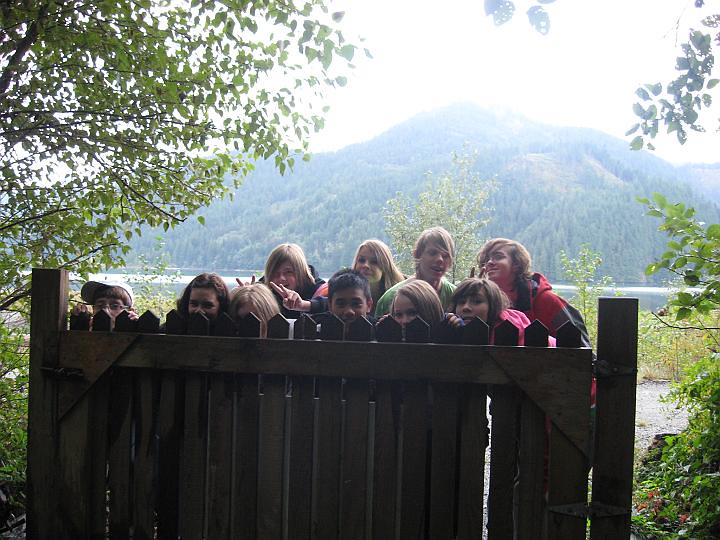
Teen Journey began with a remarkable and unexpected call: a vision to create a community where teens could fully explore and discover themselves, their talents, and their values. What started as a single camp grew into a multi-year program that touched hundreds of young lives through annual 10-day summer camps, parent intensives, ongoing monthly gatherings, and even international pilgrimages to India and Peru.
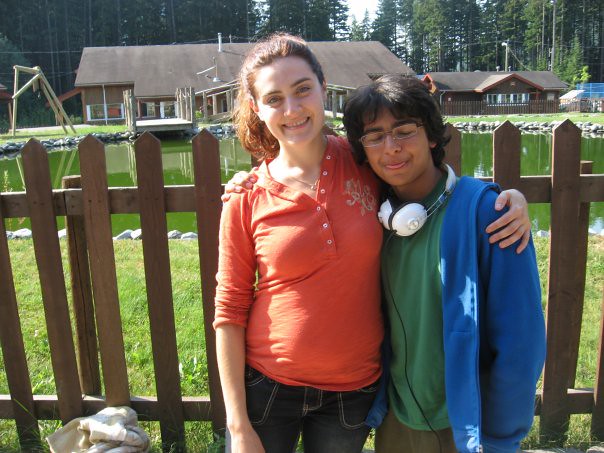
The program gathered a diverse team of community leaders, mentors, artists, and educators, professionals in many fields, united by one purpose: serving youth to create a brighter future. These mentors helped and guided young people through their own personal journey of self-discovery, giving their time, their stories, and their inspiration.
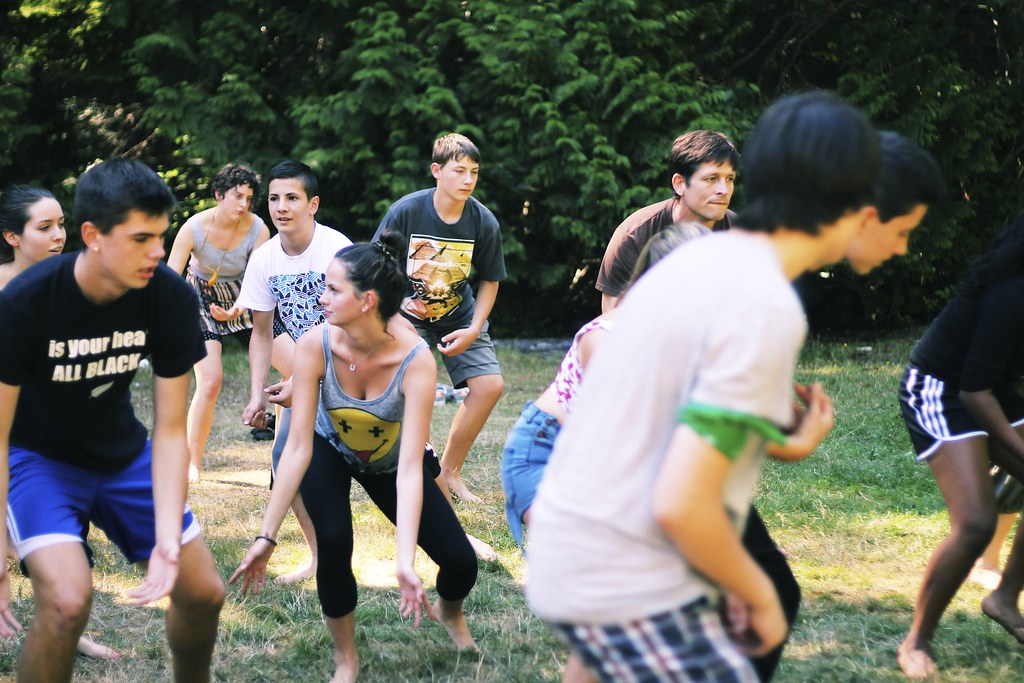
The camps included nature excursions, creative arts workshops, daily yoga and meditation, sharing circles, and carefully designed challenges that mirrored the rites of passage framework. A companion Parent Journey invited parents to explore the same tools their teens were learning, recognising that when teens and parents grow together, the results are far more powerful.
"Before Teen Journey, I faced the same problems most teenagers face. I was trying to make sense of the world around me and felt very alone in the process. Being a teenager is scary, and transitioning from childhood to adulthood is not easy. I remember feeling confused about who I was and what I wanted to get out of my life.
After the camp, I came home with the intention of changing everything for the better. Being around people that saw the good in me enabled me to start to see it as well. The self-love that I started to cultivate helped me in all areas of my life. I would say the most drastic change was that I no longer had any tolerance for toxic relationships since I finally understood what being loved was supposed to feel like.
The most important thing I have gained is the realisation that love is the only thing that should ever matter, and it's the only thing that is real."
— Former participant"In a talking circle during the second day of our camp, my perspective on 'what is a man?' changed. I used to think that the essence of a man was being a warrior, impenetrable, and without weakness. As a child living with a divorced mother in a new country, being strong for her was everything. Not wanting to show others my weaknesses, I internalised my desire for connection and pushed them away from me.
Witnessing the displays of grief, I opened my own heart, sharing my story, my fears, and allowing my fortress of impenetrability to crumble. The whole circle was in tears, yet the next morning no one seemed less manly after exposing their weaknesses and letting their vulnerability show.
Since that impact I've learned that being a man is about finding strength within vulnerability and courage within opening your heart."
— Former participant"It was an opportunity to get away from the daily hustle and bustle and try something different. I was too caught up in smoking pot and cigarettes every day to really be myself or enjoy life to its fullest.
It gave me a chance to step out of the box and really see myself for who I am. It allowed me to get involved in a network of positive people that wish to see growth and wellbeing for youth, and for that I am eternally grateful."
— Former participantTeen Journey demonstrated that this model works, and that it can be brought to life by any community willing to gather its people, commit to the vision, and serve its youth with open hearts.
This model is designed to be adapted. What follows is a practical guide for community leaders ready to bring this vision to life in their own context.
Begin by assembling a small core team of people who resonate with this vision, people who are passionately committed to their own inner journey and have a desire to share their gifts with youth. Look for people who "walk their talk": living models of the message, not just experts in theory.
Ground your program in a clear set of guiding values. What question will your program invite youth to explore? What does safety look like, emotionally, physically, and spiritually? How will you hold the tension between structure and organic flow? Write these down together. They become the container that holds everything.
Structure your program around the three stages of rites of passage: Separation, Ordeal, and Return. This arc should be present at multiple levels: in the overall program, in each day, and within individual activities. Weave in the programming pillars of Nature, Culture, Life Force, and Community in a balanced way.
Use the role framework above as a starting point, adapting titles and responsibilities to your context. Prioritise character and alignment with the vision over credentials. Ensure every role is filled by someone who understands that they are both a leader and a learner.
Train your team together, not just on logistics, but on emotional safety, non-violent communication, group dynamics, and self-awareness. Establish "care buddy" partnerships so that every staff member has someone to process their own experience with. Align on emergency procedures and child safety protocols.
The setting matters. Look for a place in nature that offers beauty, privacy, and a sense of being apart from ordinary life. The separation from the familiar is part of the rite of passage itself. Ensure it can accommodate communal living, outdoor activities, and quiet spaces for reflection.
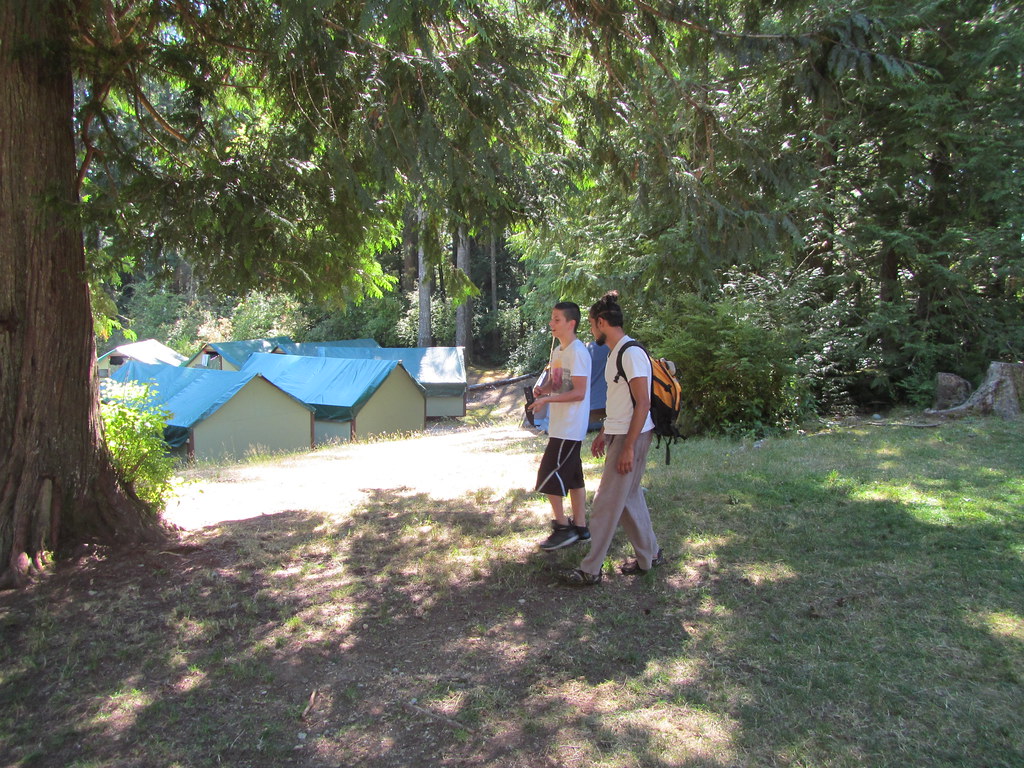
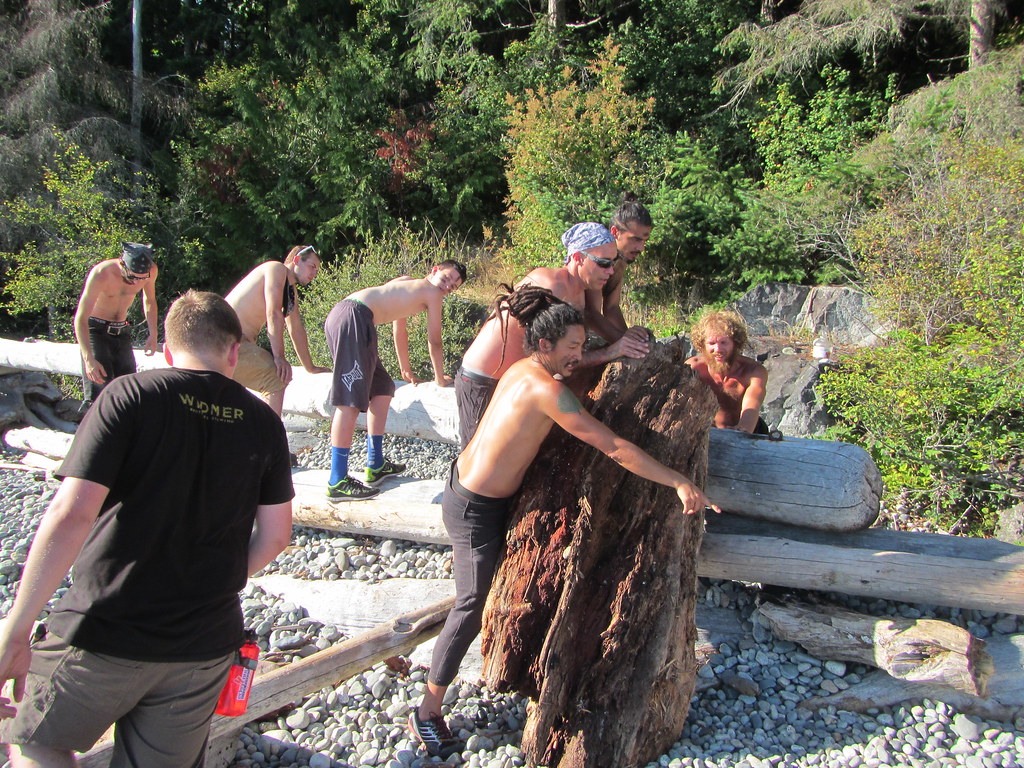
Hold the structure lightly. Be prepared for the schedule to bend in response to what the group needs. Meet daily as a staff team to share observations, adjust plans, and support one another. Trust the process. The most transformative moments are often the ones you didn't plan.
The Return is as important as the Ordeal. Design a closing ceremony that honours each teen's journey. Include parents or family where possible. Their witnessing of the teen's transformation deepens its impact. Plan for follow-up: monthly gatherings, ongoing mentorship, and community connection in the months that follow.
It takes a village to raise a child, and a village doesn't disappear after ten days. The monthly gathering is the heartbeat that keeps the connection and the transformation alive.
The camp creates a powerful opening. But the real work of integration happens in the weeks and months that follow, when teens return to their everyday lives and face the challenge of holding onto what they discovered about themselves. Without ongoing connection, even the most profound experience can fade into a memory. The monthly gathering ensures it becomes a way of life.
Once a month, the community reconvenes. Teens, mentors, and leaders come together to reconnect, share what's alive for them, and continue the journey that began at camp. These gatherings are not an afterthought. They are a core part of the program design.
Rebuild the sense of village and belonging. Return to the sharing circle. Remind each other of who they discovered themselves to be, and hold space for who they are becoming.
Process the experiences of daily life through the lens of what was learned. What fears have surfaced? What gifts are being expressed? Where is growth happening, and where is support needed?
Introduce new practices, activities, or conversations that build on the camp experience. The journey continues. Each gathering is another step on the path of self-discovery.
Keep the cross-generational connection alive. Mentors remain accessible to the teens as a calm, safe presence in times of change and confusion. The relationship endures.
The camp lights the fire. The monthly gathering tends it. Without continuity, the program is an event. With it, the program becomes a community, a living village that sustains the teens, the mentors, the families, and ultimately the broader world they are all a part of.
Beyond the monthly gathering, many mentors make themselves available to the youth for ongoing support: a text message, a phone call, a coffee. This informal mentorship is often where the most intimate and lasting work happens. A teen navigating a difficult moment at school, a conflict at home, a crossroads in their identity. Knowing there is a trusted adult who sees them, who has walked beside them, makes all the difference.
When building your program, plan for this continuity from the start. It is not an add-on. It is the soil in which the seeds planted at camp actually grow.
"No law, no action of any kind, shall be taken that will harm the children."
This ancient teaching reminds us that when we put the best interests of children at the centre of all our institutions, our world will be transformed. But beyond protecting that fire, we must feed it to keep it alive.
If you hear this call, if you see the young people in your community searching for meaning, connection, and a place to belong, know that you already have everything you need to begin. Gather your people. Trust the process. The journey will unfold.